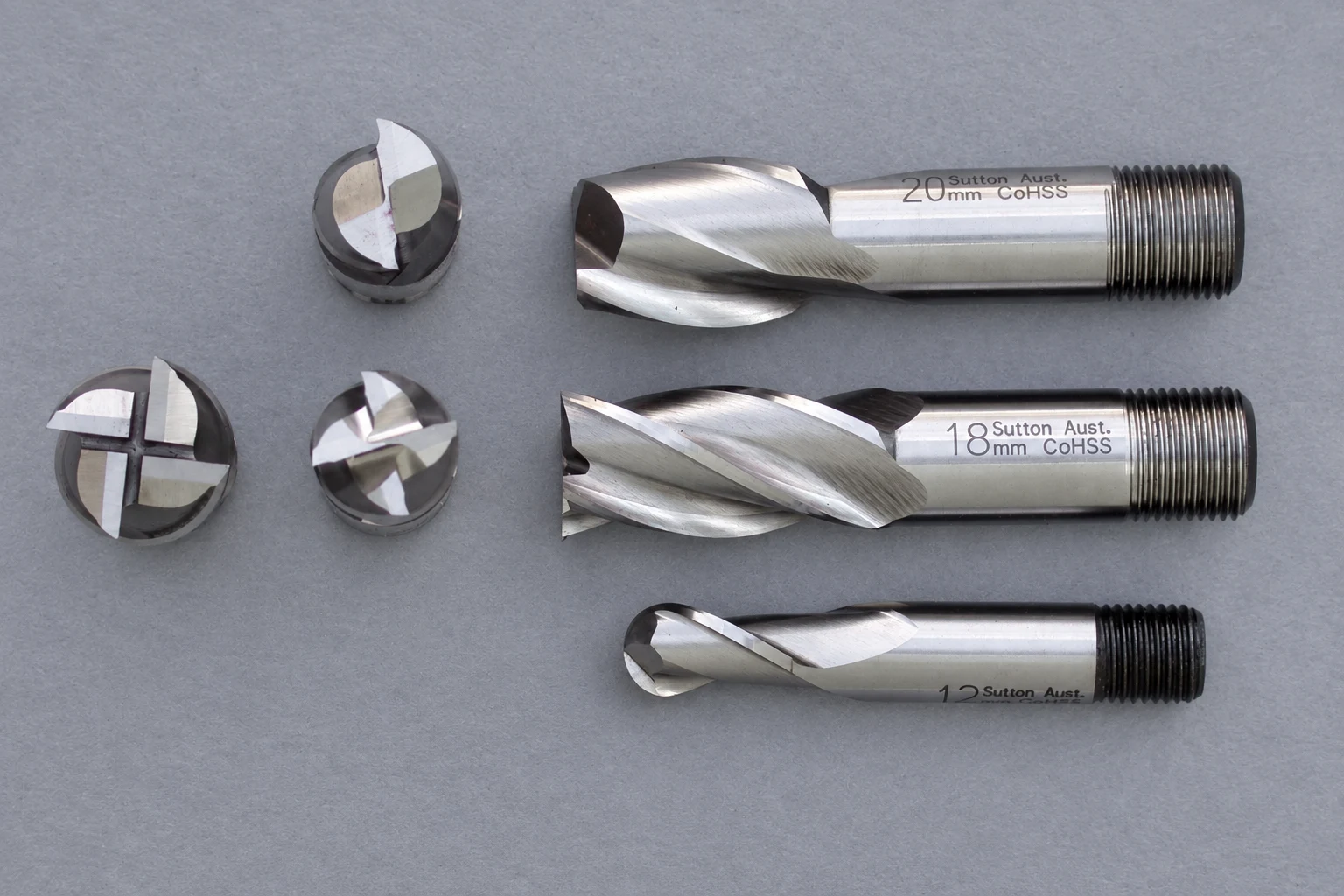

Quick answer: fewer flutes create more chip space; more flutes can add core and cutting edges
Use 2 or 3 flutes when chip evacuation is the main constraint, especially in full-width cuts and many non-ferrous applications. Four flutes provide a common balance for general milling. Six flutes can support productive light-radial-engagement finishing or high-efficiency milling in stable conditions.
These are starting directions, not rules. Flute form, helix, edge preparation, coating, diameter, reach, radial engagement, machine power and coolant can make a modern tool behave differently from a generic flute-count chart.
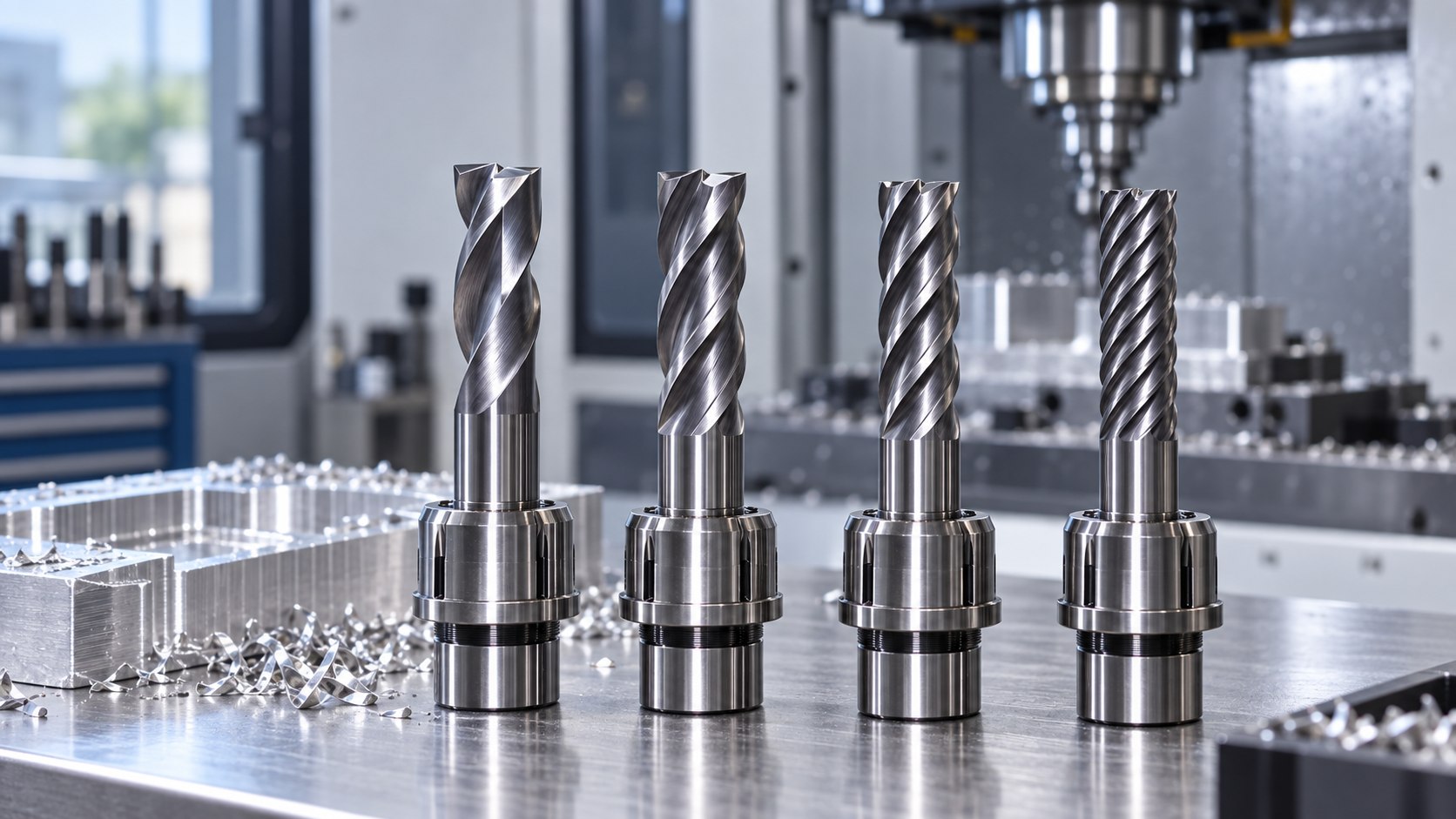
The basic geometry trade-off
For tools of similar diameter and design, adding flutes usually increases the core section and reduces each flute valley. The larger core can improve rigidity, while smaller valleys hold less chip volume. Removing flutes does the opposite: more open chip space, but less material in the core.
The number of cutting edges also affects feed rate. Milling feed is related to feed per tooth, number of effective teeth and spindle speed. Adding flutes can raise programmed feed when chip thickness and machine limits remain valid, but it also puts more edges into the cut and can increase power demand. Productivity is therefore limited by the complete system.
| Flutes | Relative chip space | Relative core | Common starting direction |
|---|---|---|---|
| 2 | Highest | Lower | Large chips, slotting and non-ferrous evacuation |
| 3 | High | Medium | Non-ferrous balance of evacuation and feed potential |
| 4 | Medium | Medium to high | General milling when geometry matches material |
| 6 | Lower | Higher | Stable light-radial-engagement and finishing strategies |
When a 2-flute end mill makes sense
Full-width slots and large chip volume
Slotting surrounds much of the tool with material and gives chips fewer exit paths. An open two-flute geometry can reduce packing risk. This is especially useful when the workpiece produces long or bulky chips.
Small diameters
At small diameter, flute valleys become physically narrow. A low flute count may preserve usable evacuation space. The trade-off is a smaller core and fewer cutting engagements, so runout and deflection still matter.
Do not equate two flutes with aluminum automatically
Two flutes are common in aluminum, but a poorly polished or unsuitable edge can still build up material. Alloy, flute finish, coating, lubrication and engagement remain part of the selection.
Why 3-flute tools are common in aluminum
Three flutes often provide a useful middle ground: more cutting edges than a two-flute tool while retaining more chip space than many four-flute designs. This can support productive side milling and pocketing in non-ferrous alloys when the flute form is designed for them.
However, “3 flute” alone does not prove that a tool is for aluminum. Check whether the product has an appropriate sharp edge, polished flute or rake surface, centre-cutting design, reach and surface treatment. See the 3-flute aluminum end mill range for model-level details.
What a 4-flute end mill does well
General side milling and finishing
Four-flute tools are widely used because they can balance core support, chip space and edge count. In steels and many general applications, that balance is a practical starting point when the selected geometry and coating match the material.
Aluminum is possible with the right design
A four-flute tool can machine aluminum. The real question is whether the flute valleys, edge finish, engagement and coolant strategy prevent chip packing and adhesion. A dedicated four-flute aluminum design can behave very differently from a general-purpose four-flute tool. Read the detailed 4-flute aluminum selection guide.
Slotting is more demanding than side milling
The same tool may perform well at a light radial step-over but pack chips during a full slot. State the operation when requesting parameters or a replacement.
Where a 6-flute end mill earns its place
A high-flute-count tool can provide a stronger core and more cutting engagements. It is often applied in stable finishing or high-efficiency toolpaths with limited radial engagement, where each flute removes a controlled chip and space is not consumed by a full-width cut.
Six flutes are not a shortcut to double the feed. Confirm:
- radial engagement and arc of contact;
- chip thickness after radial thinning effects;
- available spindle power and feed capability;
- holder runout and tool reach;
- corner engagement in internal radii;
- air or coolant delivery.
If the toolpath suddenly increases engagement in a corner, the high flute count can put too many edges under load. CAM toolpath control is part of the tooling decision.
Feed, engagement and chip evacuation must agree
Feed rate in milling is commonly calculated from feed per tooth, number of effective teeth and spindle speed. That equation converts a chosen chip load; it does not select the chip load. Use the manufacturer’s starting data for the exact tool and material.
| Variable | Why it matters | Question to answer |
|---|---|---|
| Radial engagement | Controls arc of contact and available chip space | Full slot, conventional side cut or dynamic path? |
| Axial depth | Changes flute contact length and evacuation distance | How much cutting edge is engaged? |
| Reach | Changes stiffness and chatter sensitivity | What is the gauge length from holder face? |
| Runout | Creates unequal flute loading | Is one edge carrying most of the chip? |
| Coolant or air | Moves chips away from the cut | Does delivery reach the active flute? |
Selection and quotation checklist
- workpiece alloy and hardness;
- slotting, pocketing, profiling or finishing operation;
- tool diameter, cutting length, neck and reach;
- radial and axial engagement;
- holder type and measured runout where available;
- machine spindle speed, power and coolant or air;
- current flute count, failure mode and target finish.
Review 4-flute flat end mills and long-reach 4-flute end mills only after confirming that the operation suits their geometry.
Frequently asked questions
Is a 4-flute end mill only for steel?
No. Dedicated four-flute geometries can machine aluminum, but chip space, edge finish and engagement must suit the application.
Is more flutes always faster?
No. More edges raise feed potential only when chip evacuation, power, rigidity and engagement remain controlled.
Which flute count is best for full-width slotting?
A lower flute count is often easier to evacuate in long-chipping materials, but the exact tool geometry and diameter still matter.
Does flute count determine helix angle?
No. Flute count and helix angle are separate geometry variables.
Manufacturer references
Need help confirming the exact tool specification?
Send the model code, clear tool photos, workpiece material and machining task. We will review compatibility and application details before confirming available options, price and lead time.