.jpg)
Quick answer
You can request help identifying a replacement without the old grade code, but you cannot reliably request an identical grade from shape or colour alone. Separate what is known about the insert’s fit from what is missing about its cutting application. Ask for a documented proposal and an agreed sample evaluation before treating it as an approved replacement.
This is an inquiry-preparation guide for a buyer with a worn insert, an incomplete box label or an old invoice saying only “CNMG.” It does not authenticate an insert or promise cross-brand equivalence. Sandvik Coromant’s selection guide treats insert geometry and grade as separate decisions and connects grade choice to material, operation and machining conditions.
Build a known / unknown record
| Field | Useful evidence | If missing |
|---|---|---|
| Insert designation | Box label, order record and readable insert markings | Send photos and measured dimensions; ask for identification |
| Holder or cutter | Full body code and pocket photo | State that compatibility remains unconfirmed |
| Old grade / chipbreaker | Label suffix and original supplier information | Request an application-based proposal, not an identical-grade claim |
| Workpiece and operation | Material specification, hardness and operation sheet | Ask the workshop; do not substitute “metal” |
| Current result | Part requirement, worn-edge photo and operator notes | Describe the purchasing need without inventing a failure diagnosis |
The photo pack that saves back-and-forth
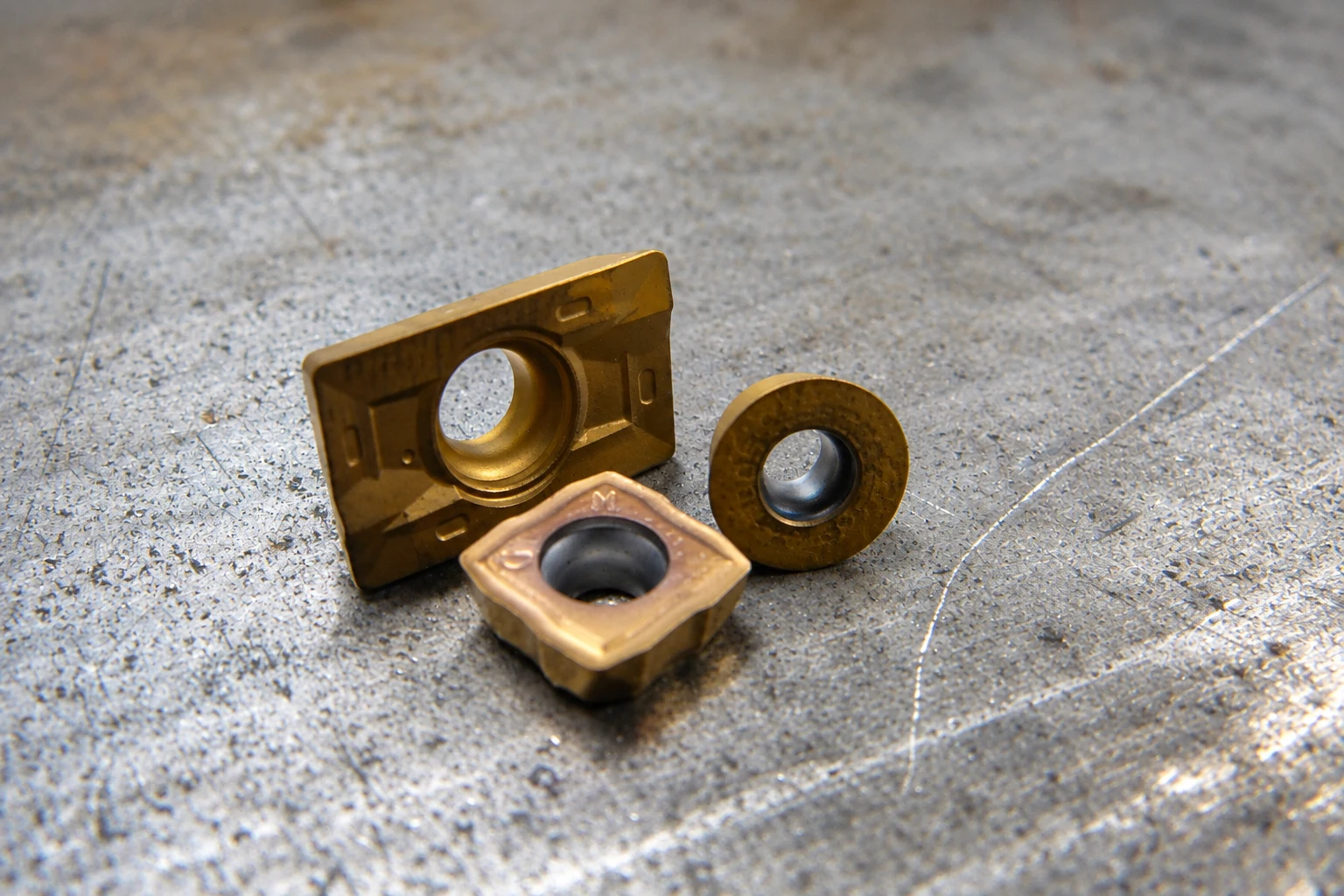
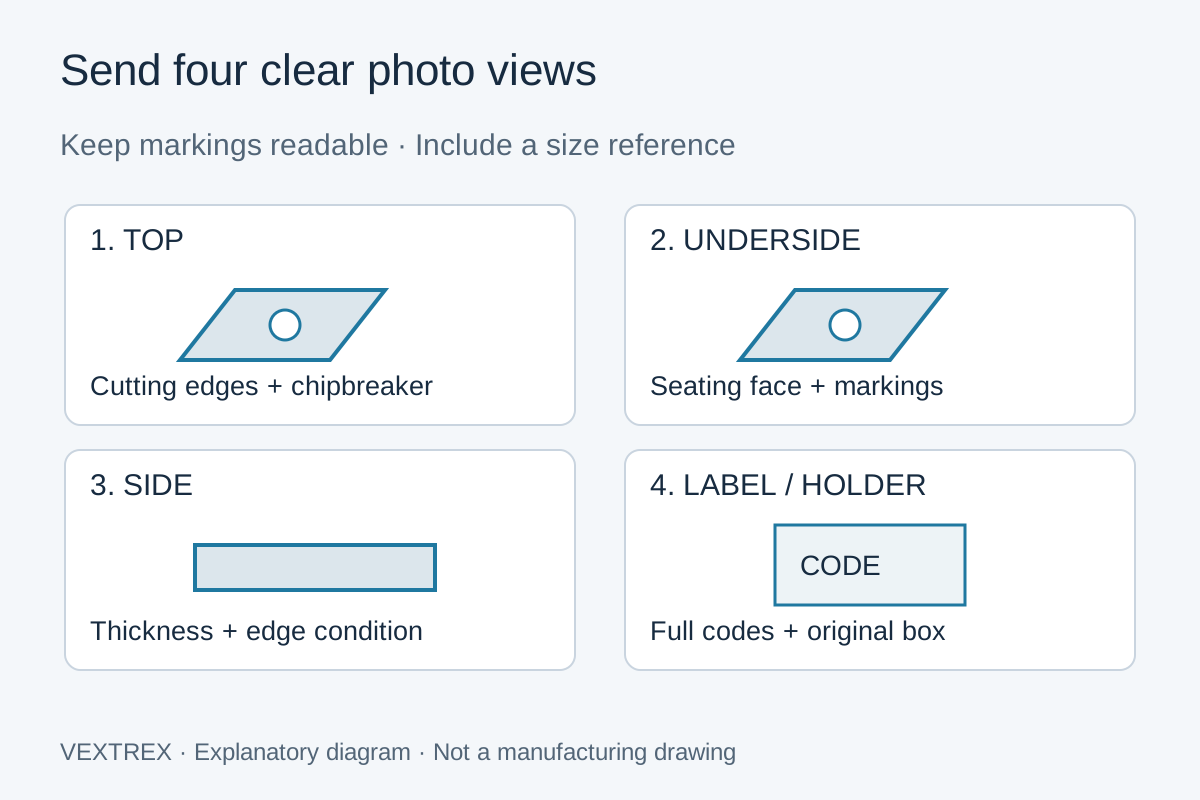
Provide one overview showing the insert and its box, a sharp close-up of every readable label, and separate views of the insert’s top, underside and side. Add a scale reference if dimensions are not known. Photograph the complete holder code and an empty pocket only when the machine is safely stopped and the operator has removed the insert.
Keep the original photographs. Do not retouch away markings or crop out suffixes that seem unimportant. If only a worn edge is available, say so: wear can make visual identification less conclusive. Label any caliper readings with the unit and measurement location.
Ask the operator for the missing application details
Request the actual workpiece specification rather than a broad label such as steel or stainless. Note roughing or finishing, continuous or interrupted cutting, outside or inside work, and the part requirement being missed. Include current speed, feed and depth with units if recorded. Where the data are unknown, explicitly write “unknown.”
Describe your goal in observable terms: obtain a repeatable approved supply, reduce the need to re-identify each order, or review a specific finish or edge-failure issue. Avoid asking the supplier to promise that an unidentified replacement will last the same number of parts.
Copy this replacement inquiry structure
- Known insert information: [complete marking, photos, measurements and original supplier if known].
- Current holder/cutter: [full code and pocket photo].
- Missing information: [grade, coating, chipbreaker or other unknown fields].
- Application: [material, hardness, operation, machine/setup and recorded cutting data].
- Acceptance requirement: [drawing requirement or workshop evaluation to be agreed].
- Commercial request: [sample and repeat quantities, packing and destination].
Finish with: “Please state the exact proposed insert, the evidence for holder compatibility, the intended application and any unverified assumptions. Quote sample conditions separately from repeat-order conditions. Do not describe this as identical to the old grade unless that equivalence is documented.”
Turn the approved sample into a repeat-order record
Agree sample cost, freight, quantity and availability before dispatch. Let the workshop define and carry out the evaluation. Record the proposed full designation, grade, chipbreaker, supplier, packaging label and the actual outcome against the acceptance requirement.
Once approved, retain those details together with the compatible holder and applicable operating record. For the next purchase, order by the full approved record instead of shortening it back to “gold CNMG.” A later change of grade or geometry should be stated in the new proposal and reviewed before acceptance.
Use our insert designation guide for the geometry code, grade and coating guide for the application distinction, and CNMG product family as a relevant starting point. Send the identification pack through the inquiry button below; this starts a review, not a binding compatibility approval.
Common questions
Can the coating colour identify the grade?
Do not use colour as a grade-equivalence record. Request a full designation and supplier documentation; colour and photos alone are insufficient.
Should I invent a grade code to get a quotation faster?
No. Mark it as unknown and provide the application details. A clear information gap is safer and more useful than a false specification.
Technical reference and editorial scope
Reference checked October 5, 2026. The photo pack, inquiry template and recordkeeping workflow are Vextrex editorial recommendations, not a manufacturer-approved substitution chart. No customer result, machining test, fixed dispatch time or grade equivalence is claimed.
Need help confirming the exact tool specification?
Send the model code, clear tool photos, workpiece material and machining task. We will review compatibility and application details before confirming available options, price and lead time.