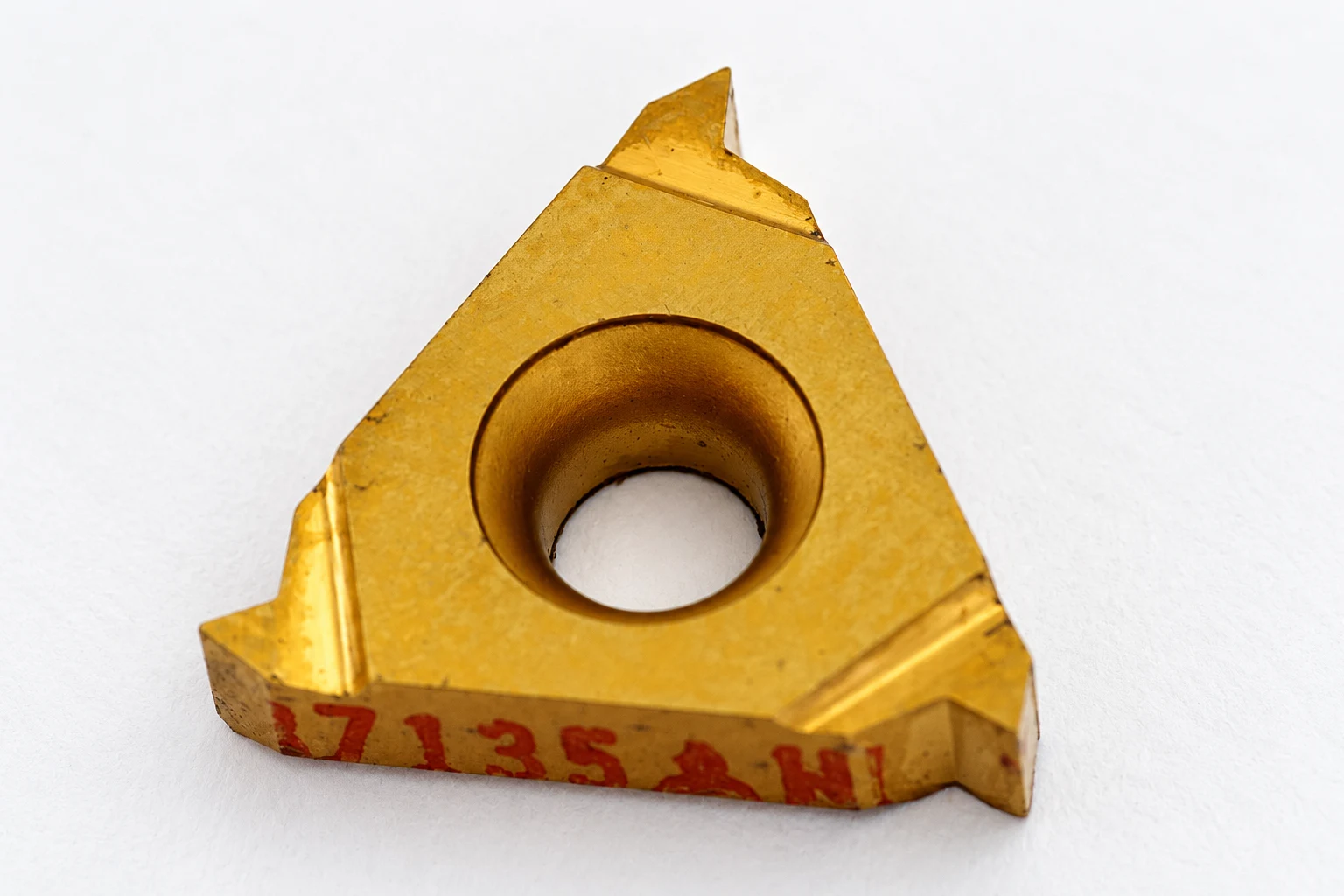

Quick answer: ER is external and IR is internal
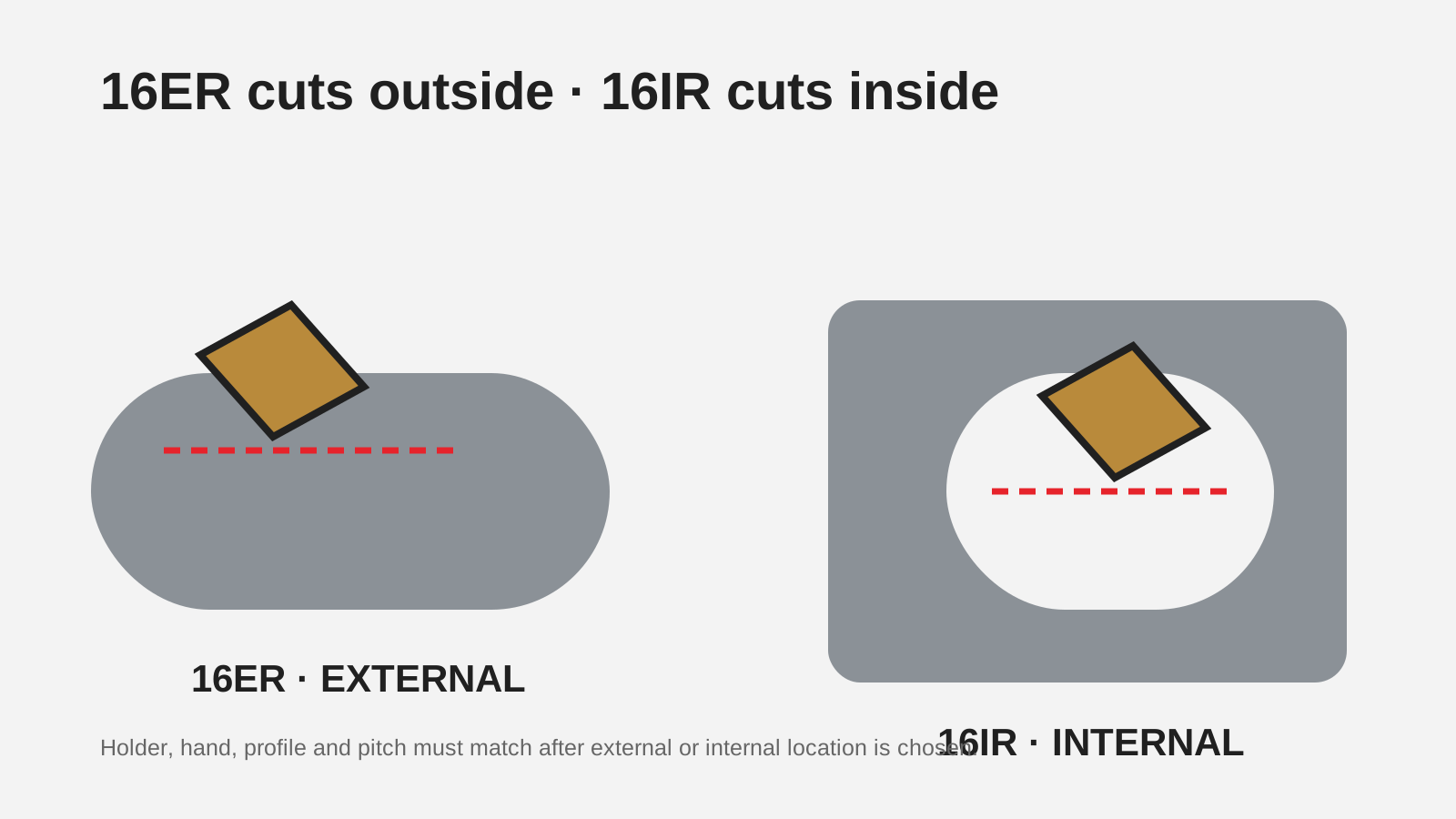
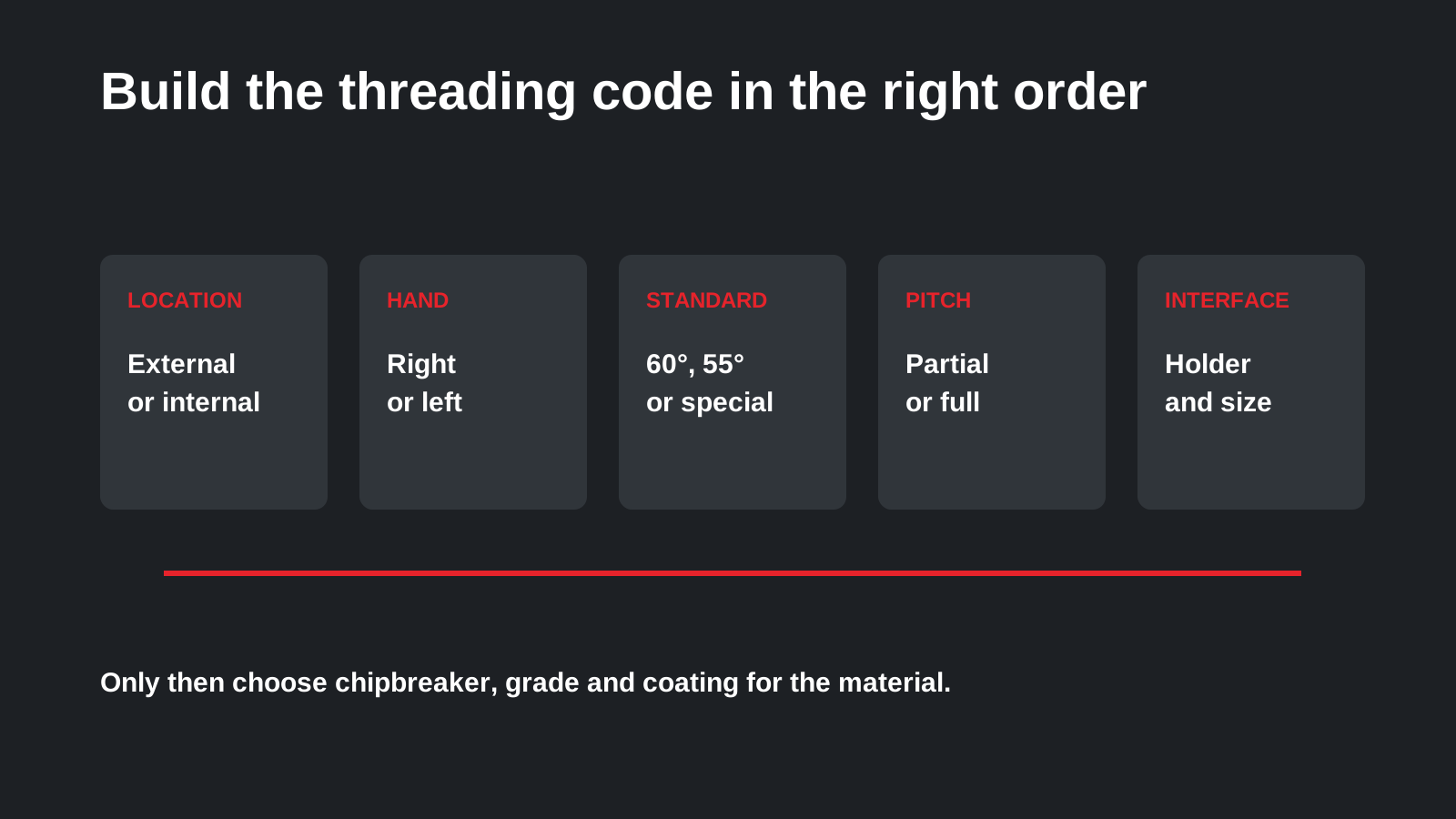
In common laydown threading-insert designations, 16ER is used for external right-hand threading and 16IR for internal right-hand threading. They are not interchangeable labels. The insert size, external or internal form, hand, thread angle, pitch range, partial- or full-profile geometry and holder must all match.
If the box only says “16ER” or “16IR,” the specification is incomplete. Send the full suffix—for example A60, AG60 or a pitch-specific full-profile code—plus the holder and thread drawing.
What the 16, ER and IR positions mean
16 identifies an insert size family
The size number belongs to the threading system’s dimensional series. It does not identify thread pitch. A 16-size insert can be offered in multiple profiles and pitch ranges, and it must fit a compatible holder pocket.
E and I separate external from internal
E indicates an external-threading insert and I indicates an internal-threading insert in these common designations. External and internal cutting edges are arranged differently because they approach different surfaces of the workpiece.
R identifies right-hand orientation
R indicates a right-hand insert orientation. Left-hand systems use the corresponding L designation. Hand must be checked together with holder orientation, feed direction and spindle setup; do not infer it only from a catalogue photo.
Match thread form and pitch after choosing ER or IR
60° and 55° are different profile families
Metric and Unified thread systems commonly use a 60° included form, while Whitworth-family forms use 55°. Pipe and other standards add further crest, root and taper requirements. A “threading insert” is not universal across these systems.
Pitch can be metric or TPI
Metric threads state pitch in millimetres; inch threads commonly use threads per inch, abbreviated TPI. Confirm the drawing rather than converting from a rough visual measurement. A pitch gauge and known sample can help identify an existing thread, but final production should use the specified standard.
A60 is a range, not every possible 60° thread
Carmex catalogue data for a representative 16V ER A60 partial-profile insert lists 0.5–1.5 mm pitch, equivalent to 48–16 TPI. That verified range belongs to the specified product; do not copy it to every supplier’s 16ER A60 without checking current data.
Partial-profile versus full-profile inserts
Partial profile covers a pitch range
A partial-profile insert forms the flanks and root region across a stated pitch range, but it does not finish the thread crest. The starting diameter and machining allowance therefore matter. This flexibility is useful for varied jobs, but the process must control the crest separately.
Full profile is pitch-specific
A full-profile insert forms the crest for its stated pitch and thread standard. It can support consistent thread form and reduce crest burrs when the pre-turn diameter is correct. It is not a general substitute for a neighbouring pitch.
Multi-tooth and special profiles need their own checks
Productivity inserts, taper threads and special forms add constraints such as minimum thread length, runout space and exact standard. Send the drawing rather than asking only for “16ER for pipe thread.”
Holder and hand compatibility
SER holders are associated with external right-hand inserts
A common SER holder system is designed around external right-hand laydown inserts. Match the holder size position to the 16 insert family and confirm shim, screw and anvil where applicable. Similar letters in another supplier’s code are not sufficient evidence by themselves.
SIR bars are associated with internal right-hand inserts
Internal threading requires a boring-bar style holder that can enter the bore while providing clearance and rigidity. Confirm minimum bore, usable depth, bar diameter and overhang. The correct 16IR insert cannot compensate for a bar that is too large for the bore or extended too far.
Left-hand operations require the matching system
A left-hand insert and holder change the cutting direction and setup. Confirm spindle direction and feed direction with the machine plan. Never reverse a holder or mount an insert incorrectly to imitate the opposite hand.
Six common ordering mistakes
- Sending only “16ER” without pitch or profile.
- Confusing external ER with internal IR.
- Ordering 60° for a 55° thread or the reverse.
- Using a partial-profile range as proof of a full-profile pitch.
- Ignoring holder size, hand or minimum bore.
- Treating chipbreaker and grade suffixes as universal between suppliers.
Keep the approved insert, holder, shim and screw codes together in the repeat-order record.
What to send for a threading-insert match
- external or internal thread;
- thread standard and included angle;
- metric pitch or TPI;
- right- or left-hand setup;
- major and minor diameter or complete drawing;
- thread length, shoulder clearance and bore depth;
- workpiece material;
- current insert and holder codes;
- quantity and destination.
View 16ER external threading inserts and 16IR internal threading inserts. Vextrex will confirm profile, pitch coverage, holder compatibility, grade, stock, price and lead time for the exact request.
Send a section drawing when a shoulder is close
Thread runout, relief groove and shoulder clearance determine whether the insert and holder can complete the thread without collision. For internal work, include bore diameter before threading and the distance to the bottom. A nominal thread callout alone does not show available approach and exit space.
Identify the thread standard, not only its angle
Two threads can share a 60° included angle while differing in crest, root, allowance or taper requirements. State the governing standard and class of fit where available. If the existing part is unknown, label measurements as identification data rather than a confirmed specification.
Keep holder and insert as an approved pair
Once a sample passes, record insert, holder, shim or anvil, screw, hand and tool offset together. For repeat orders, preserve the supplier-specific grade and chipbreaker suffix instead of shortening the record to “16ER.”
| Question | Typical code decision |
|---|---|
| Outside or inside? | ER or IR family |
| Right or left hand? | R or L orientation |
| Which standard? | Profile angle and form |
| Which pitch? | Partial-profile range or full-profile pitch |
| Which holder? | Size, hand, bore and clearance |
Frequently asked questions
Can a 16ER insert cut an internal thread?
No. 16ER is an external right-hand designation. Internal threading normally requires the corresponding IR system and holder.
Does 16ER A60 cover every 60° thread?
No. A representative Carmex partial-profile A60 range covers 0.5–1.5 mm or 48–16 TPI, but the exact supplier product and thread form must be confirmed.
What is partial profile versus full profile?
Partial profile covers a stated pitch range without finishing the crest. Full profile is made for a specific pitch and forms the crest when the pre-turn diameter is correct.
Are supplier suffixes interchangeable?
No. Chipbreaker and grade suffixes are manufacturer-specific.
Manufacturer reference
- Carmex metric threading catalogue, including the referenced 16V ER A60 0.5–1.5 mm / 48–16 TPI range.
Use the current drawing for the exact insert and holder being quoted; the cited range is not a universal compatibility claim.
How to verify an unknown or replacement thread
Do not rely on pitch alone. Record major or bore diameter, pitch, included angle, taper if any, thread direction and a clear section photograph. Compare the result with the applicable standard or customer drawing. If evidence remains incomplete, label the proposed profile as subject to sample confirmation.
For internal work, verify that the bar enters the pre-bore with clearance while remaining rigid at the required depth. A correct 16IR insert is still unusable if the bar body, clamp or coolant connection collides with the component. For an external thread near a shoulder, record the relief groove and runout allowance.
During sample approval, inspect pitch diameter and form with the agreed method, not only whether a mating part turns on. Retain pre-turn diameter, number of passes, infeed strategy and final offset so the successful thread can be repeated.
Need help confirming the exact tool specification?
Send the model code, clear tool photos, workpiece material and machining task. We will review compatibility and application details before confirming available options, price and lead time.