
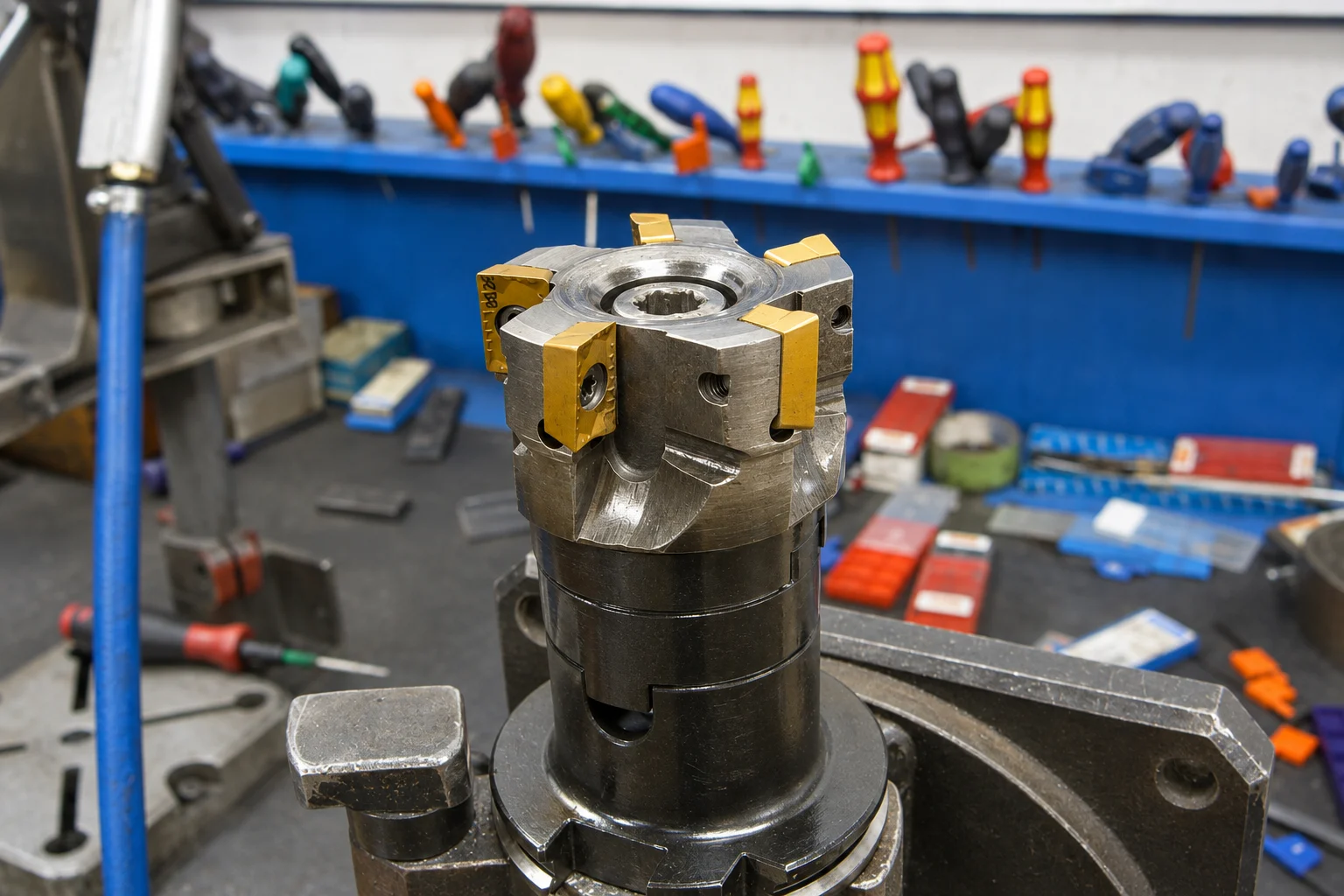

A milling cutter repeatedly enters and leaves the material, so its cutting edges experience changing temperatures. Coolant delivery belongs in an edge-failure review, but “run everything dry” is not a complete machining instruction. Check the material, operation, toolmaker’s guidance and the observed damage before changing the coolant strategy.
Inspect the edge before naming the cause
Photograph the edge before discarding it, with a fresh insert for comparison. Record where the damage occurs and whether the problem appears suddenly or develops over successive parts. A photograph of a chipped corner alone does not prove thermal cracking. Preserve the operating conditions and ask the tooling supplier to review the damage pattern rather than choosing a different grade from colour or appearance.
Understand the temperature cycle
Sandvik Coromant describes milling as intermittent cutting and explains how cutting fluid can intensify thermal cycling and contribute to cracking. Its dry-milling guidance also lists exceptions, including certain finishing and material applications. Treat this as a reason to review the specific process, not a universal rule to shut off coolant on every cutter. Grade, workpiece requirements and the machine’s permitted process all matter.
Check whether delivery is consistent
Record the approved coolant type, concentration check, nozzle positions and whether delivery is interrupted during the cut. Also note the material, cutter and insert codes, engagement and existing cutting data. Review any blockage or change in supply with the responsible operator. Do not solve a delivery problem by assuming a new insert grade will tolerate it indefinitely.
| Item | What to verify |
|---|---|
| Suspected thermal damage | Retain a close edge photograph and operating record |
| Material and operation | Separate roughing from finishing and check material-specific guidance |
| Coolant delivery | Record consistency, nozzle position and approved fluid checks |
| Trial result | Compare accepted quality and edge condition under a documented strategy |
Keep a change traceable
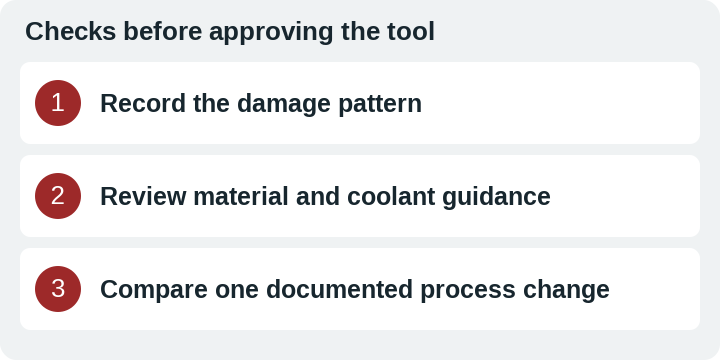
Agree the revised strategy with the toolmaker’s application guidance and the shop’s process requirements. Compare edge condition, accepted finish and repeatability under that strategy. Changing grade, feed and coolant together may establish a workable process but will not isolate the coolant effect. Keep the successful configuration explicit so repeat orders and later investigations use the same basis.
What to send with your inquiry
Send Vextrex the insert and cutter codes, material, edge photos and current coolant arrangement. Include whether the pass is roughing or finishing so the review addresses the actual operation. Contact Vextrex.
Related reading: milling insert identification · controlled tooling trial.
Technical references
Need help confirming the exact tool specification?
Send the model code, clear tool photos, workpiece material and machining task. We will review compatibility and application details before confirming available options, price and lead time.