
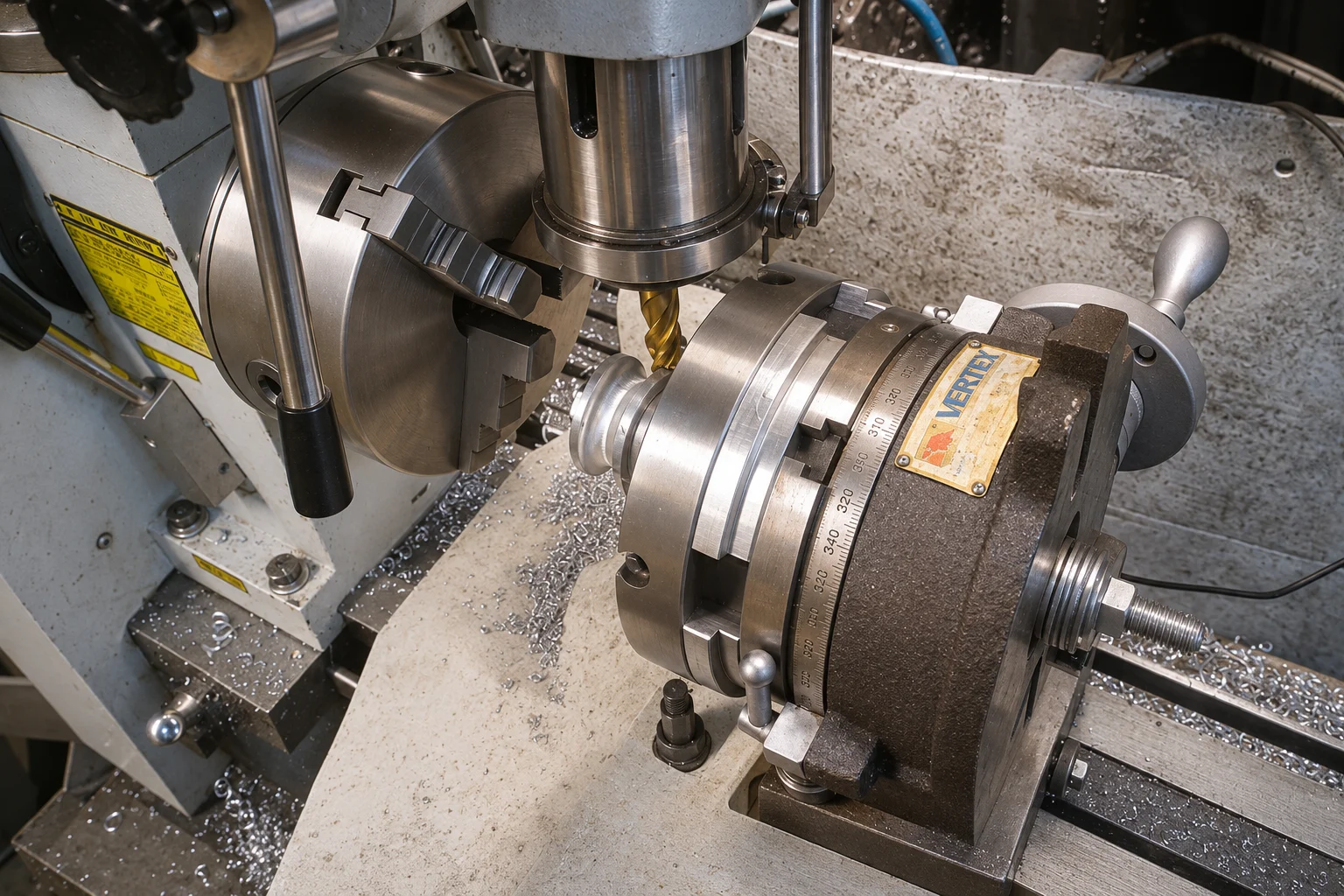

An end mill that cuts a pocket wall is not automatically approved for the way the program enters solid material. State whether entry is by an existing hole, a vertical plunge, a linear ramp or a helical path. The toolmaker must confirm the method and its limits for the exact cutter; diameter and flute count alone are not enough.
Describe the first contact with solid material
Show the pocket opening, available entry length, depth and any pre-drilled hole. A sketch should identify where the cutter first contacts material and whether its full width is engaged. This is different from showing only the final pocket boundary. Include any floor or wall that restricts the motion so the supplier does not assume unlimited room for a ramp or helix.
Keep the entry methods distinct
Linear ramping combines axial and lateral travel. A helical entry follows a circular path while progressing axially. A vertical plunge has a different engagement and chip-evacuation problem. Sandvik’s slot-milling guidance discusses linear ramping for opening closed slots and circular ramping for wider openings. Those method descriptions do not establish that every end mill supports each motion.
Ask for the cutter’s actual capability
Obtain the manufacturer’s entry guidance for the exact tool, including any stated maximum ramp angle or allowed helical diameter range. Centre-cutting capability alone should not be treated as permission for an unrestricted plunge. Also check chip evacuation, holder clearance and the material-specific cutting data. When a capability is not documented, leave the candidate unapproved rather than filling the gap with a generic internet angle.
| Item | What to verify |
|---|---|
| Vertical plunge | Confirm end-cutting capability and tool-specific guidance |
| Linear ramp | Check permitted angle, entry distance and engagement |
| Helical entry | Check diameter range, clearance and feed convention |
| Existing entry hole | Confirm hole size and the planned transition into cutting |
Check which feed the control expects
A feed value at the tool centre and a feed value at the cutting contact may need to be distinguished in circular milling. Sandvik’s milling definitions make that distinction. The responsible programmer should use the toolmaker’s calculation and the control’s conventions, then prove the complete entry path. Save the accepted method with the tool specification so a replacement cutter is assessed against the same operation.
Qué enviar con su consulta
Send Vextrex the pocket section, material and planned entry method with your current tool code. Include the available space for a ramp or helix so the candidate can be reviewed against the program. Contact Vextrex.
Related reading: end mill flute configuration · end mill application and chip-space checks.
Technical references
¿Necesita ayuda para confirmar la especificación exacta de la herramienta?
Enviar el código modelo, fotos de herramientas claras, material de pieza y tarea de mecanizado. Revisaremos la compatibilidad y los detalles de la aplicación antes de confirmar las opciones disponibles, precio y tiempo de entrega.