
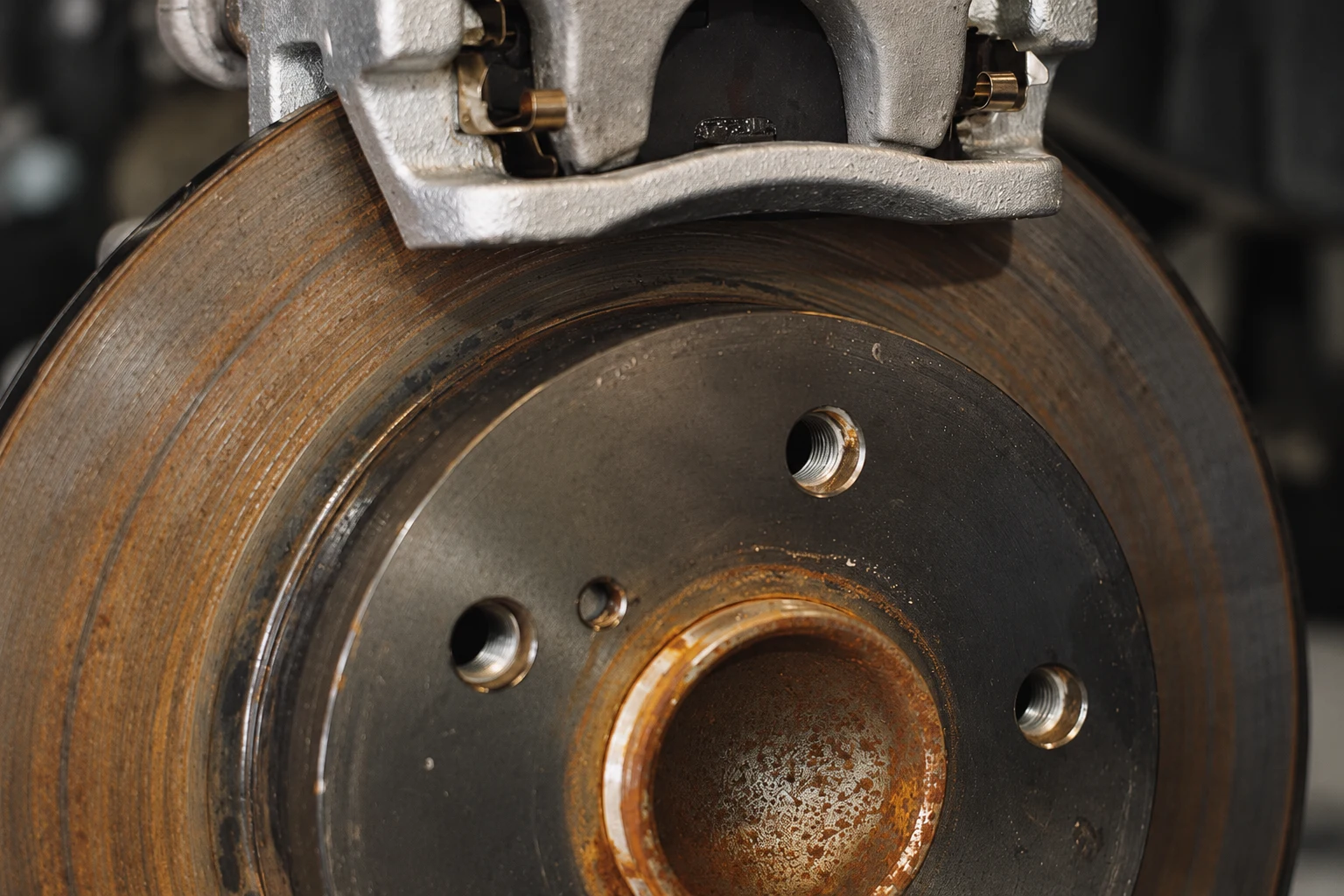
An insert that handles one casting can fail early on the next job, even when both purchase orders say “cast iron.” Choosing a carbide insert grade for cast iron starts with identifying the material and the actual cut. Buying by coating color or a broad application label leaves the important variables unanswered.
The workshop goal is a repeatable tool change that protects component quality. The purchasing goal is a complete, traceable specification that can be reordered. This guide focuses on those decisions rather than recommending one branded grade for every casting.
1. Identify the Casting Before Selecting the Grade
Get the drawing, material specification and available hardness information. Grey iron, ductile or nodular iron, compacted graphite iron and heat-treated variants should not be treated as one machining condition. Sandvik’s cast iron application overview separates the material families and their tooling options.
Most general cast iron recommendations start in the ISO K application group. That group is a starting point, not a finished purchase specification. Special alloyed or hardened castings need confirmation against their actual material condition and the tool manufacturer’s guidance.
Tell the supplier whether the operation starts on an as-cast surface or a previously machined surface. Identify holes, slots, uneven allowance and other interruptions along the tool path. Record whether failures began after a change of foundry batch or heat treatment.
Do not guess missing hardness from the component’s appearance. If the material paperwork is unavailable, describe the uncertainty and send the existing successful tool specification, wear photographs and production records. These narrow the investigation without pretending to identify the casting precisely.
For a distributor supplying several foundries or workshops, keep each application separate. “Cast iron customer” is too broad a label for a repeat-order specification.
2. Match the Carbide Insert Grade for Cast Iron to the Cut
For a stable, continuous turning operation, review wear resistance and predictable dimensional performance. For interrupted or less stable cutting, review edge security and the supplier’s toughness recommendation. These priorities are not interchangeable, and both require a suitable geometry and supported setup.
Sandvik’s cast iron turning grade information distinguishes grades by wear resistance, substrate and interruption demands. Treat manufacturer examples as evidence of selection principles, not proof that an unrelated supplier’s grade is equivalent.
Write the grade request around the operation:
| Job condition | Information to give the supplier |
|---|---|
| Continuous finishing | Material condition, finish, tolerance and dimensional drift |
| Interrupted turning | Interruption locations, frequency and observed edge damage |
| Roughing an as-cast surface | Allowance variation, surface condition and setup support |
| Фрезерование | Cutter body, insert position, engagement and coolant practice |
Do not transfer a turning recommendation directly into a milling cutter. Interrupted engagement and the cutter’s pocket requirements must be evaluated for that operation. For a milling inquiry, provide the full body designation alongside the APMT insert reference.
Coating method alone is not the answer. Chemical vapor deposition and physical vapor deposition describe processes, not complete application qualifications. Substrate, coating system, edge preparation and geometry have to work together. Tungaloy’s cast iron turning grade information illustrates why a grade is specified as a system.
Confirm dry or wet machining recommendations for the exact tool and operation. Do not assume that every cast iron job should run dry, or change coolant practice at the same time as the trial grade without recording it.
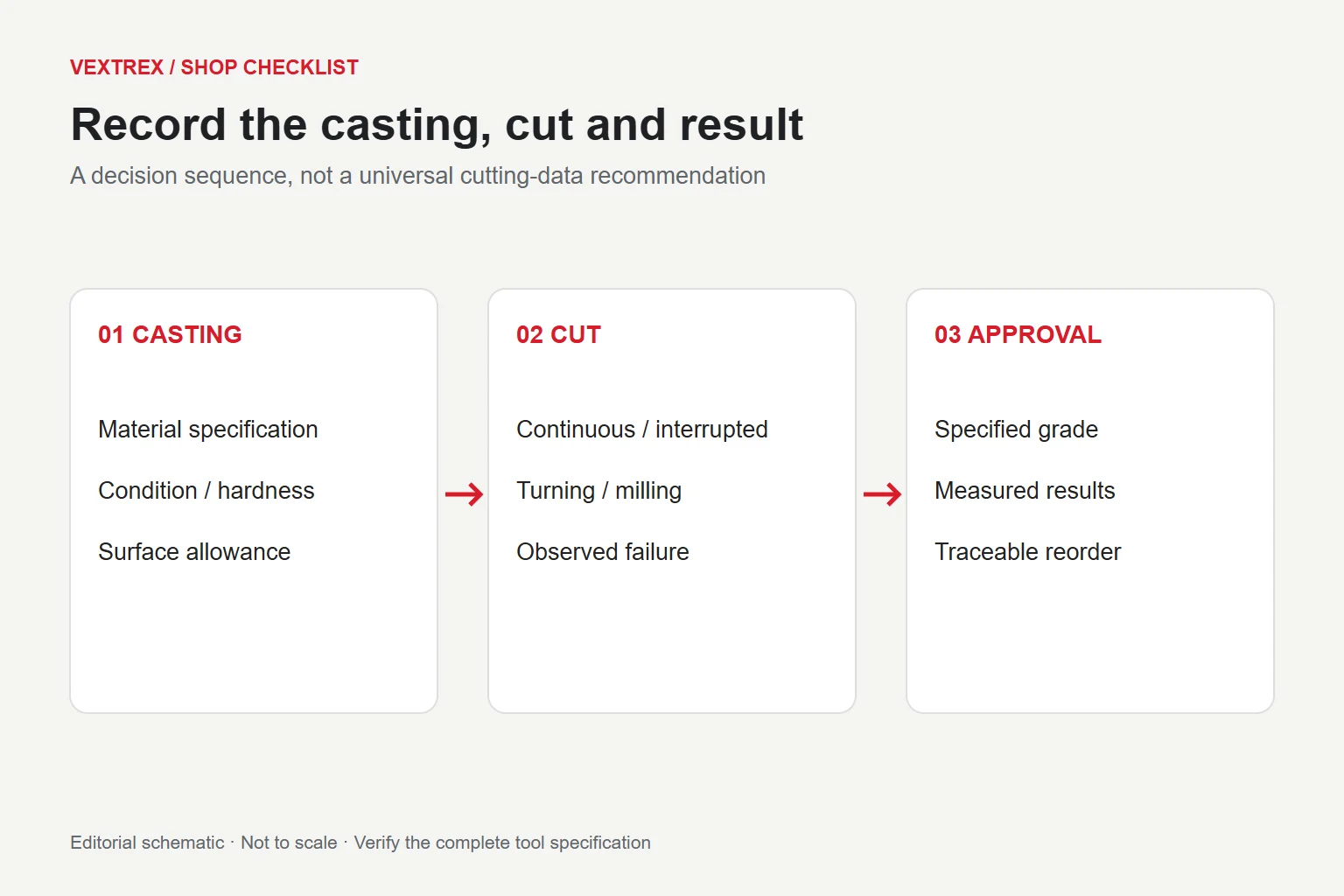
3. Select from Wear Evidence and Run a Traceable Trial
Inspect a used edge before ordering a replacement. Broad wear along the flank raises different questions from missing carbide at an interrupted feature. Record where size or finish becomes unacceptable and the reason the operator stops the run.
If the edge breaks immediately, verify the seat, fastening parts, tool projection and actual stock condition before judging the grade. If wear grows predictably but dimensions drift, record the inspection results and the accepted tool-change limit. Describe the observation instead of naming a cause you have not confirmed.
Используйте CNMG turning insert models или WNMG turning insert models to identify the mechanical configuration separately from the required grade. Our WNMG vs CNMG guide covers that shape and holder decision.
Before the trial, agree the component quality criteria, measurement method and stopping rule. Keep the baseline drawing, casting batch and setup record. Record any changed cutting conditions, rather than attributing every improvement to the coating.
Log acceptable parts per edge, dimensional consistency, finish, indexing time and unexpected stops. An edge that lasts longer while producing out-of-tolerance components is not a production improvement. Compare the cost of acceptable output, including rework and replacement tooling.
For mixed-material production, keep the conclusions material-specific. The stainless steel chipping guide addresses a different failure investigation; a successful casting trial does not qualify the same configuration for stainless steel.
4. Frequently Asked Questions
Is an ISO K designation enough to order an insert?
No. Include the complete model, manufacturer’s grade, geometry, material condition and operation. A broad application group cannot establish pocket fit or production performance.
Can the same grade machine grey and ductile iron?
Some grades have an application range covering both, but confirm the particular grade and conditions. Do not assume identical cutting data or tool life across materials.
Should I order the hardest grade available?
Not without considering interruptions and stability. Ask for the balance appropriate to the observed wear or damage and the exact casting, then verify it on the job.
Summary
Identify the casting, classify the cut and select a documented grade using wear evidence. Approve the complete tested configuration, not every insert sharing its shape or coating color.
Request a grade review and sample quotation. Send Vextrex your casting specification, available hardness information, insert and holder codes, operation, wear photographs, quantity and destination. Begin with our CNMG references или WNMG references. Standard carbide insert samples are free in complete boxes of 10; the buyer pays freight, confirmed after inquiry. Exact sample availability and dispatch arrangements are confirmed for the requested configuration.
Technical sources
Нужна помощь в подтверждении точной спецификации инструмента?
Отправьте код модели, четкие фотографии инструмента, материал заготовки и задачу обработки. Мы рассмотрим совместимость и детали приложения, прежде чем подтвердить доступные варианты, цену и время выполнения.