
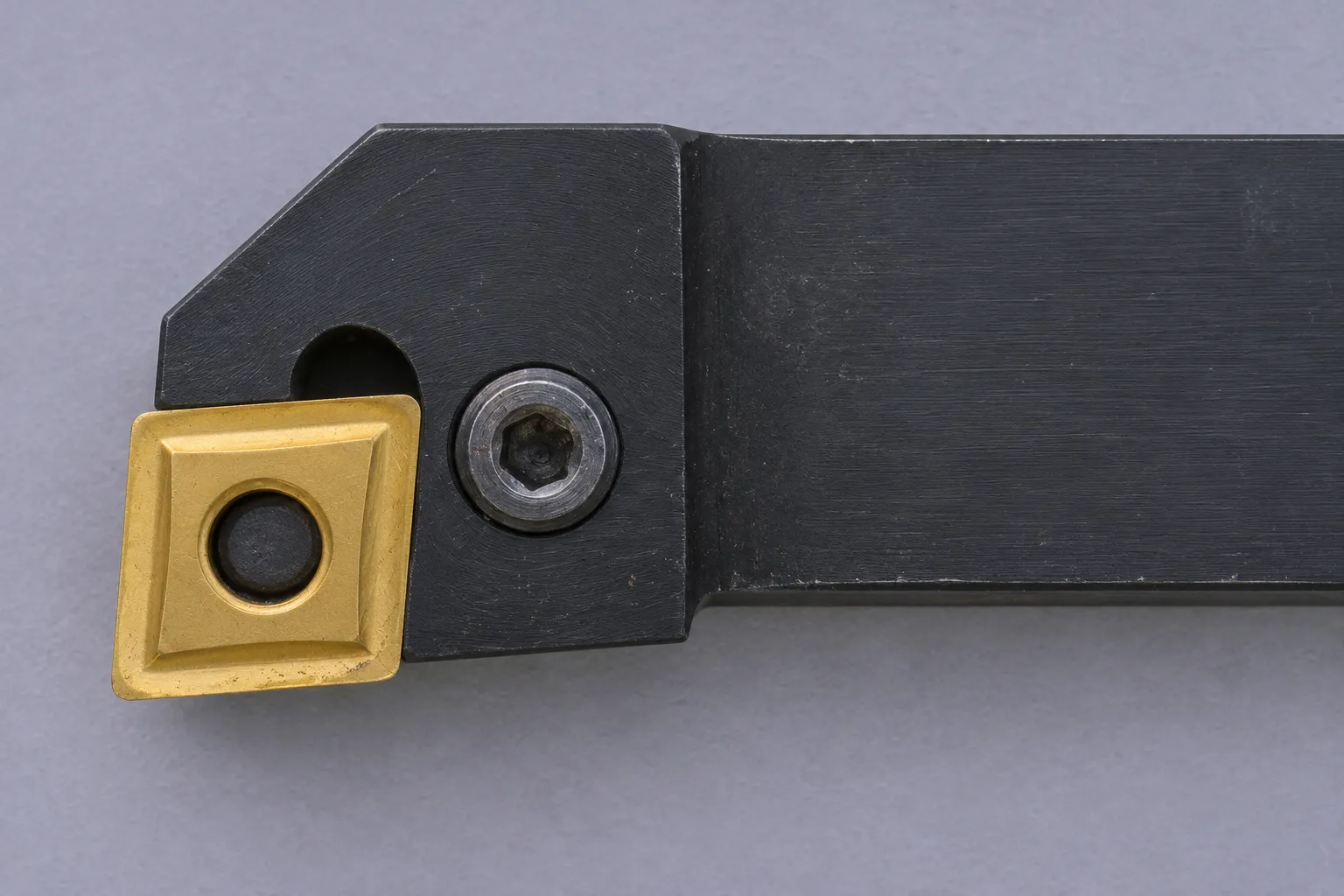

How do you tell which chipbreaker works better?
Compare two inserts on one repeatable operation and decide what a good cut looks like before the trial. Keep the insert size, nose radius, grade and other edge features the same where possible, then change the chipbreaker. If the grade, coating or edge preparation differs too, treat the result as a comparison of complete inserts.
Pick one pass and a measurable target
Start with the actual pass that needs improvement: for example, an outside diameter pass that leaves chips wrapped around the part. Use the production drawing and process plan to set acceptance criteria. That can mean acceptable chip evacuation, the required surface finish and an agreed inspection point for the cutting edge. A chip that breaks well is not a win if the finish or dimensional result fails.
Check each candidate against the manufacturer’s application guidance for the material, feed per revolution and depth of cut. Use a common test condition only if it is appropriate for both. If there is no suitable overlap, test each insert within its recommended conditions and report that you compared two setups.
Record the same evidence for both inserts
| บันทึก | What to write down |
|---|---|
| Configuration | Full code, nose radius, chipbreaker, grade and edge preparation if known; holder and workpiece material or batch |
| เงื่อนไขการตัด | Actual speed, feed per revolution, depth of cut, coolant setup and whether the cut is interrupted |
| ควบคุมชิป | Whether chips clear, wrap or mark the work; note any operator intervention |
| Part quality | Surface finish or measurement, dimensional checks and visible defects at the same point in each trial |
| Edge condition | Photograph comparable edges after the same cutting time or part count; note wear, chipping or material buildup |

Avoid a misleading trial result
Run the baseline with a fresh, correctly seated edge. Keep the same material batch, machine, holder, coolant and setup where practical. Inspect chips only after stopping the machine and following shop procedures. If the first result is close, repeat with fresh edges before changing a production order. Do not continue a cut that gives unsafe chip accumulation or unexpected edge failure.
If both candidates give long chips, review where the actual feed and depth of cut sit in their application ranges before trying a different grade. If only one candidate meets the finish target but also wears faster in the trial, report both outcomes. Compare cost per acceptable part only once you have a meaningful parts-per-edge count and actual price; a short screening test does not establish production tool life.
See the general carbide insert sample trial checklist for broader trial planning. If you run แทรกการแทรกแบบ CNMG, send your current code and one specific pass so the candidate geometry can be checked against the job. Final configuration and availability are confirmed at quotation.
Technical references
- Sandvik Coromant: Turning Handbook — turning geometry and chip control guidance.
- Sandvik Coromant: External turning — operation and tooling considerations.
ต้องการความช่วยเหลือยืนยันความแม่นยําของเครื่องมือหรือไม่
ส่งโค้ดจําลอง, รูปเครื่องมือที่ชัดเจน, งานชิ้นงานและงานช่าง. เราจะทบทวนรายละเอียดความเข้ากันได้และนําไปใช้ก่อนที่จะยืนยันตัวเลือก, ราคาและเวลานํา.