
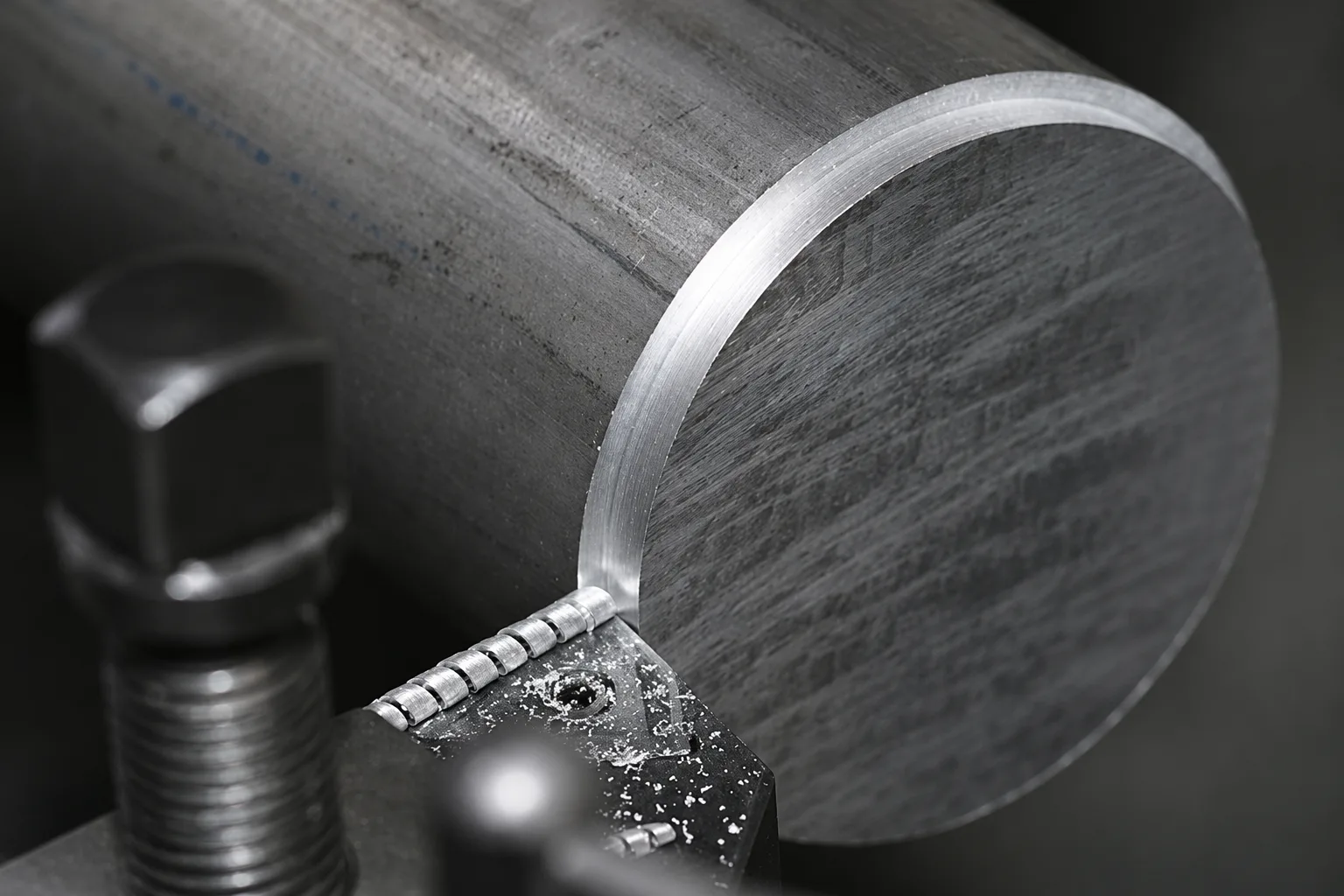

When aluminum starts smearing across a turned surface, stop and inspect the insert before ordering a harder grade. Material transferred from the part can build up around the cutting edge, changing the edge that actually contacts the work. A similar looking finish can also come from a chipped edge or trapped chips, so the part alone cannot tell you which replacement to buy.
Look at the tool and the part together
Take a close, well-lit photograph of the edge before cleaning it. Check for an irregular deposit near the tip and compare it with an unused corner. Record whether the finish is smeared, scratched by loose chips or marked at regular intervals. A deposit is consistent with adhesion; missing edge material or regular vibration marks require a separate check.

Change one thing in the next trial
Use a fresh edge and an undamaged holder, then verify that the toolmaker lists the geometry for the alloy and cut. A sharp, smooth rake face is a good candidate when adhesion is the concern, but a high-silicon casting can also demand abrasion resistance. Check coolant delivery against the maker’s guidance and stay inside the recommended cutting range. Changing the grade, feed and coolant at once makes the result hard to interpret.
| What you observe | What to check |
|---|---|
| Material on the tip | Check adhesion and the insert maker’s non-ferrous geometry |
| Material missing at the edge | Check edge damage and whether the cut is interrupted |
| Marks only where chips pass | Check chip evacuation and nozzle aim |
Give the buyer a specification to verify
Ask for the full insert designation, including the geometry suffix, and the actual alloy or drawing material. Record whether the job is continuous or interrupted and whether it is a roughing or finish pass. The CCGT family is one place to look for aluminum turning; the family code alone does not specify the edge preparation or prove fit.
สิ่งที่ต้องส่งพร้อมกับคำถามของคุณ
Include the alloy, full insert code and an edge photo when requesting a sample. Send your tooling details.
Related: CCGT aluminum turning inserts · DCGT aluminum turning inserts.
Technical references
ต้องการความช่วยเหลือยืนยันความแม่นยําของเครื่องมือหรือไม่
ส่งโค้ดจําลอง, รูปเครื่องมือที่ชัดเจน, งานชิ้นงานและงานช่าง. เราจะทบทวนรายละเอียดความเข้ากันได้และนําไปใช้ก่อนที่จะยืนยันตัวเลือก, ราคาและเวลานํา.